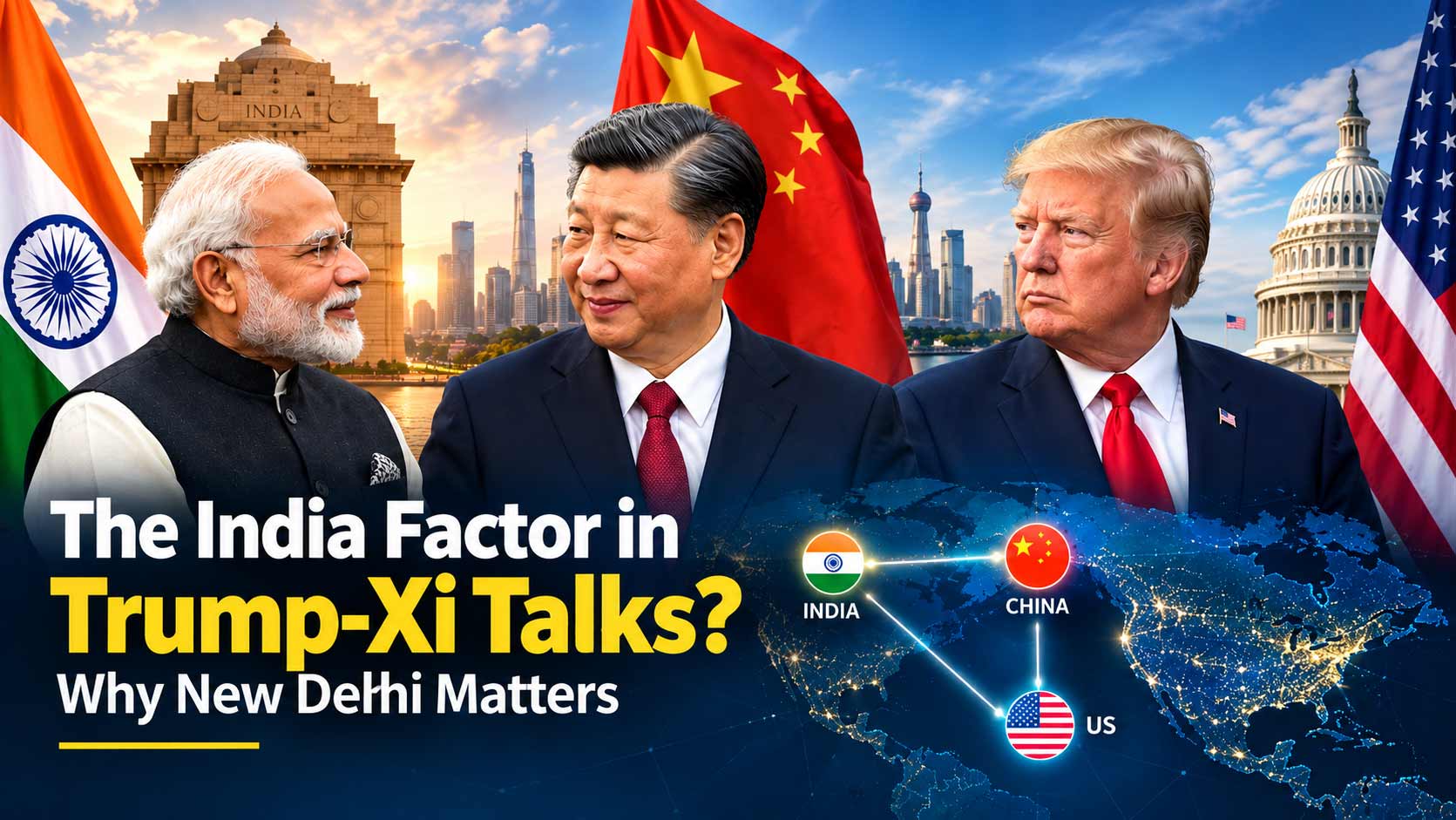
New Delhi and Washington are becoming important stops in China’s wider diplomatic engagement with major powers
Chinese President Xi Jinping’s recent diplomatic engagements have placed India and the United States in the broader picture of China’s relations with major global powers.
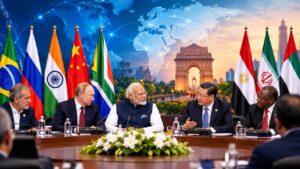
Xi’s meeting with Prime Minister Narendra Modi in New Delhi during the BRICS Summit was followed by his meeting with US President Donald Trump in Washington. The two meetings have different bilateral agendas, but their timing highlights India’s position in the evolving relationship between China and the United States.
The immediate discussions between Xi and Trump are centred on issues involving trade, technology, Taiwan, economic relations and wider international developments. India is not necessarily a direct subject of these discussions, but New Delhi’s growing role in international diplomacy provides an important regional context.
From New Delhi to Washington
Xi’s visit to India marked an important stage in the recent diplomatic engagement between New Delhi and Beijing.
India and China have experienced significant differences in recent years, particularly over border-related issues. At the same time, both countries have continued diplomatic and economic engagement.
The meeting between Modi and Xi provided an opportunity for the two sides to discuss their bilateral relationship and the need for continued communication.
For India, maintaining dialogue with China is part of its broader foreign-policy approach. New Delhi also continues to maintain relationships with the United States, Russia, Iran and other major countries.
This approach allows India to engage with different global powers while maintaining its own strategic priorities.
Why India Matters in the US-China Relationship
The United States and China remain two of the world’s most influential powers, with significant economic, technological and strategic interests.
India has also become an increasingly important country in the Indo-Pacific region.
New Delhi maintains defence and strategic cooperation with Washington while continuing economic and diplomatic engagement with Beijing. India also remains an active participant in groupings such as BRICS, the G20 and the Shanghai Cooperation Organisation.
This gives India relationships with countries across different geopolitical groupings.
As competition between Washington and Beijing develops, India’s independent foreign-policy position becomes an important part of the wider regional environment.
The Modi-Xi Meeting and the India-China Relationship
The recent Modi-Xi meeting took place against the background of efforts to improve communication between India and China.
The relationship continues to include both areas of cooperation and significant differences.
Border issues remain an important concern for India and China. Economic relations are also substantial, while questions involving trade, security and regional developments continue to require diplomatic engagement.
The recent diplomatic contact should therefore be viewed as part of an ongoing process rather than as a complete change in the relationship.
The US-China Agenda
The Trump-Xi meeting has its own set of major issues.
Trade and tariffs remain important areas of discussion between the world’s two largest economies. Technology, artificial intelligence, supply chains and strategic industries are also increasingly connected to the US-China relationship.
Taiwan remains another sensitive issue in relations between Washington and Beijing.
The two countries also have differing positions on several international developments, including conflicts and security issues in other parts of the world.
These subjects form the immediate framework for discussions between the two presidents.
India’s Strategic Space
India’s position is significant because New Delhi has maintained relationships with both Washington and Beijing without formally aligning itself with either country.
India’s foreign policy has traditionally placed emphasis on strategic autonomy and independent decision-making.
This means New Delhi can cooperate with the United States in areas such as defence, technology and the Indo-Pacific while maintaining diplomatic and economic engagement with China.
At the same time, India continues to maintain important relations with Russia, Iran and other countries.
This creates diplomatic space for India to engage with multiple centres of global power.
New Delhi and Washington: Two Different Diplomatic Contexts
Xi’s engagements in New Delhi and Washington should not be treated as a single negotiation.
The India-China relationship has its own issues, while the US-China relationship has a different set of economic, technological and strategic concerns.
However, the sequence of the two meetings highlights India’s position within the broader international system.
New Delhi is simultaneously engaging with China and the United States while pursuing its own national interests.
That makes India’s diplomatic choices increasingly relevant to the wider balance of power in the Indo-Pacific.
The Bigger Picture
The significance of Xi’s India and US engagements goes beyond the meetings themselves.
China is managing its relationship with India while dealing with its complex relationship with the United States. Washington continues to develop its strategic relationship with New Delhi, while India maintains communication with Beijing.
For India, this environment provides an opportunity to maintain diplomatic flexibility.
The country can engage with different powers on different issues while keeping its foreign-policy decisions centred on its own interests.
The New Delhi-Washington sequence therefore offers a broader picture of the changing geopolitical landscape: China, India and the United States are increasingly connected through economics, technology, security and diplomacy, even when their individual relationships remain separate.
For India, the central question is not necessarily choosing between major powers, but maintaining sufficient strategic space to engage with each of them according to the issue at hand.